Drone Agriculture Spraying

Cover more acres in less time with drone spraying — precise, efficient application of fertilizers, pesticides, herbicides and foliar treatments for California farms, orchards and vineyards.

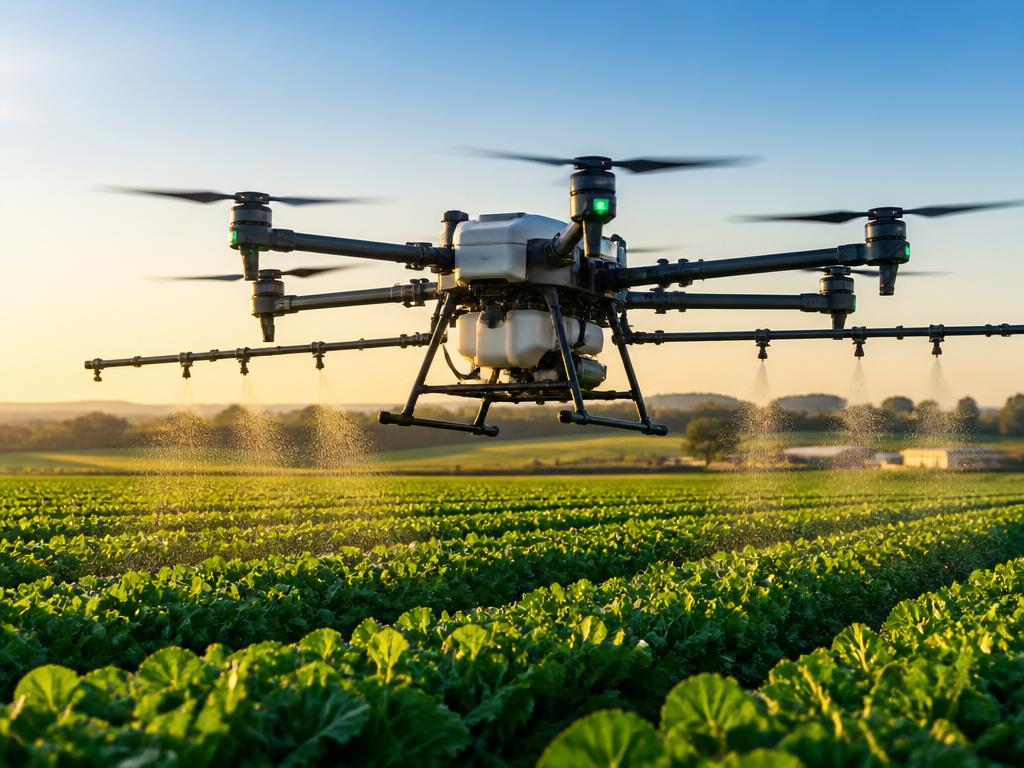
Agricultural drone spraying crops on a California farm at sunrise

What Drone Agriculture Spraying Looks Like With Go Pro Works

Ground rigs compact soil, leave tracks, and struggle in wet fields. Manned aircraft cover ground fast but can't treat edge rows, corners, or small blocks precisely. Drone agriculture spraying sits between the two: faster than a tractor on the right jobs, more precise than a plane, and able to work when ground equipment would rut the field.

Go Pro Works flies commercial-grade agricultural spray drones across Northern California. Each platform carries tanks sized for row crops, orchards, vineyards and specialty crops, with nozzles adjusted to droplet size and crop canopy height. GPS mapping, terrain-following radar, and automatic flow control keep application even and on target, while on-board wind sensing pauses treatment when conditions are unsafe.

Common applications include fertilizer and foliar feeding, fungicide and insecticide programs, pre- and post-emergent herbicide treatments, vineyard and orchard cover sprays, and growth regulator applications. We also handle field mapping and stand counts so you can plan passes, track coverage, and document every acre for your records.

Because the drone never touches the ground, spraying can happen in soft or recently irrigated conditions without soil damage. That means more spray days per season, fewer delays around weather windows, and less compaction stress on the land you are trying to protect.

Who this is for

  • Row crop farmers needing mid-season fungicide or foliar feed
  • Vineyard and orchard managers with tight spray windows
  • Ranchers and pasture managers controlling weeds or brush
  • Specialty crop growers with soft or irregular fields
  • Agricultural operations wanting to reduce soil compaction
Frequently asked questions

What does a drone spraying scope include?
Field mapping and flight planning, mixing and loading, targeted aerial application of the product you specify, buffer and drift management around neighbors, sensitive crops, and waterways, and an as-applied record of acreage and coverage for your files.
How much ground can you cover and how quickly?
Depending on payload, spray rate, and field layout, we generally cover in the range of 15 to 30 acres per hour of flight time, plus setup and refills. Most orchard and row-crop blocks under 100 acres are handled in a single visit, and spot treatments are often same-week.
What products and materials can be applied?
Labeled liquid fungicides, herbicides, insecticides, foliar nutrients, and adjuvants applied at the label rate for aerial application. Any product used must be legal for the crop and the method, and product supply and required licensing are coordinated with you or your PCA before we fly.
How do I prepare the field before the flight?
Provide field boundaries or an APN, mark obstacles such as power lines, wells, pivots, and towers, identify beehives, organic neighbors, and occupied structures inside the buffer, and keep workers and livestock out of the block during application and through the re-entry interval on the label.
What conditions stop a spray from happening?
Sustained wind above the label limit, inversion conditions, rain in the window that would wash off the product, and temperatures that push volatility all cause us to reschedule. We would rather move the flight a day than put your material where it does not belong.