Parking Lot Striping & Sealcoating

Your parking lot is the first thing every customer and tenant sees — we make it look maintained, flow correctly, and meet ADA requirements.

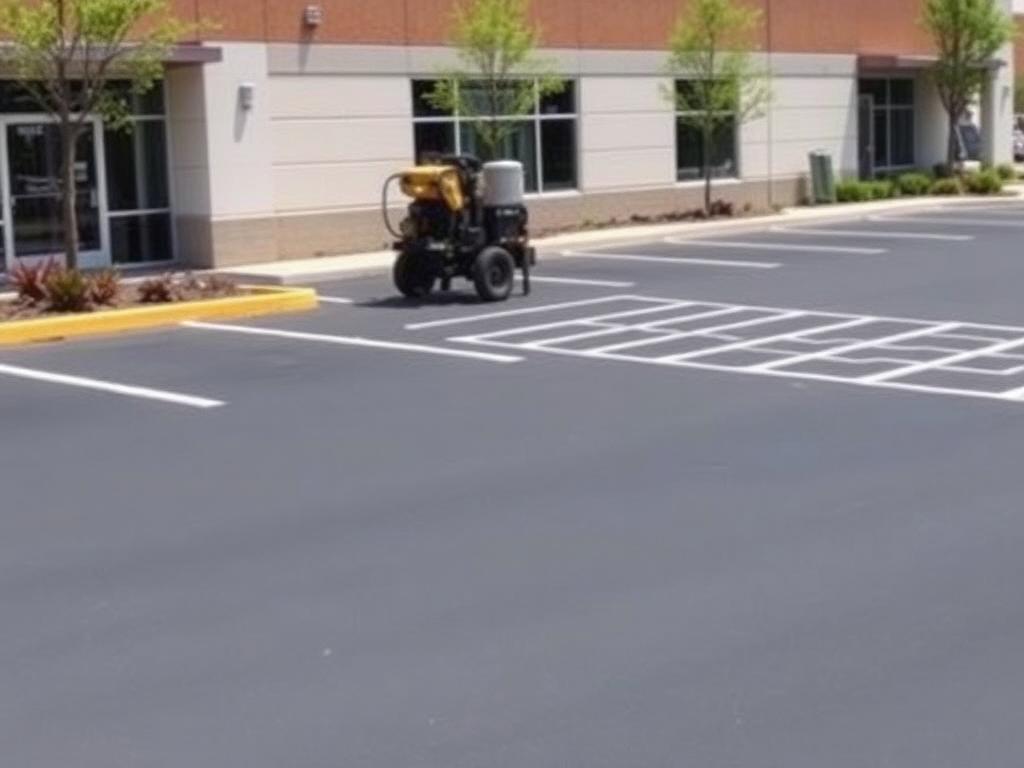
Freshly sealcoated parking lot with crisp white line striping

What Parking Lot Striping & Sealcoating Looks Like With Go Pro Works

Faded stalls, cracked asphalt and a washed-out handicap symbol quietly tell visitors that a property isn't being cared for — and they create real exposure, from ADA complaints to trip-and-fall claims to accelerated pavement failure. Go Pro Works restores both the surface and the layout.

Sealcoating is preventive maintenance. A commercial-grade sealer applied every two to three years blocks UV, water intrusion, oil and fuel, slows oxidation, and restores the deep black finish that makes fresh striping pop. Applied on schedule, it can meaningfully extend the life of asphalt that would otherwise need resurfacing.

Striping is layout and compliance. We lay out stalls to maximize count without crowding, then apply high-visibility traffic paint for stalls, directional arrows, fire lanes, loading zones, crosswalks, numbering, curb painting, speed bumps, and no-parking hatching. ADA accessible stalls, access aisles, and van-accessible signage are laid out to current dimensional requirements.

Work is scheduled in sections, overnight, or over a weekend so the property stays operational, and we handle crack filling, pothole patching, and sweeping as part of the prep so the finished surface actually holds.

Who this is for

  • Retail centers, restaurants, and medical offices
  • HOAs and apartment community parking
  • Industrial and warehouse yards
  • Churches, schools, and municipal lots
  • Property managers preparing for sale or inspection
Frequently asked questions

What does a striping and sealcoating scope cover?
Lot sweeping and blowing, oil-spot priming, crack filling, sealer application, then layout and painting of stalls, ADA-accessible spaces and access aisles, fire lanes, loading zones, directional arrows, stop bars, curb painting, and wheel-stop or bollard touch-up. Restriping to a new layout includes blackout of the old lines.
How long is the lot out of service?
Restriping alone is often an overnight job with the lot back in use the next morning. Sealcoating needs the surface closed to traffic for 24 hours minimum in warm dry weather. Larger lots are phased section by section so the business can stay open, and we usually schedule nights or weekends.
What materials do you use and when is the right season?
Commercial-grade asphalt emulsion sealer, hot or cold pour crack filler by joint width, and traffic-grade acrylic or alkyd striping paint with reflective additive on request. Sealcoating needs dry weather with surface temperatures above roughly 50 degrees, so spring through early fall is the reliable window in the Central Valley.
How do I prepare the lot before you arrive?
Notify tenants and staff of the closure window, arrange overflow parking, and have all vehicles, trailers, and dumpsters moved out of the phase we are working. Irrigation and sprinklers along the perimeter should be shut off, and we will handle sweeping, cones, and signage.
Will the new layout meet ADA requirements?
We stripe accessible stalls, access aisles, signage locations, and van-accessible dimensions to current requirements, and we will flag layout or slope conditions that need repair work before they can comply. Final code approval always rests with your local building department.